A half is a row of modules
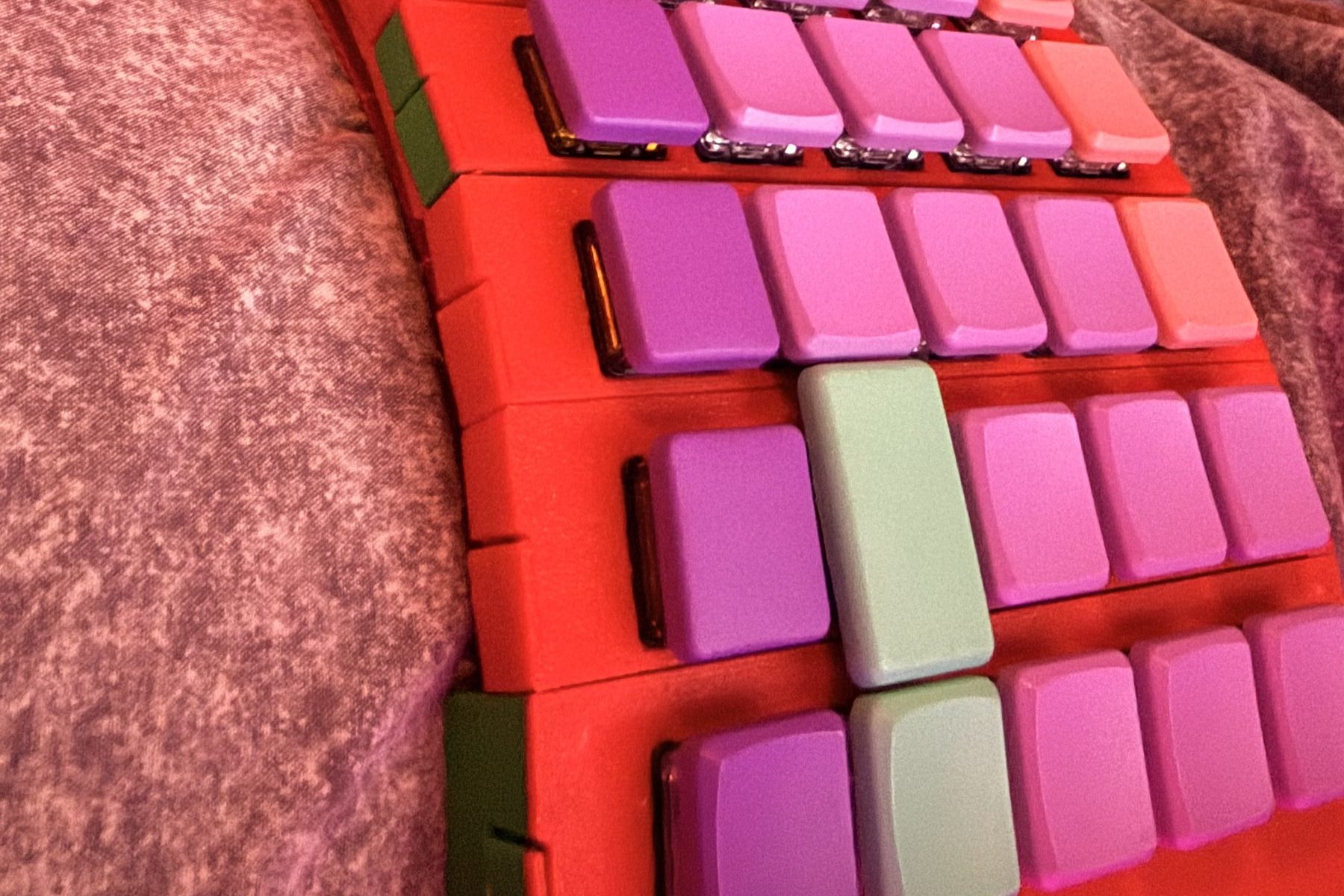
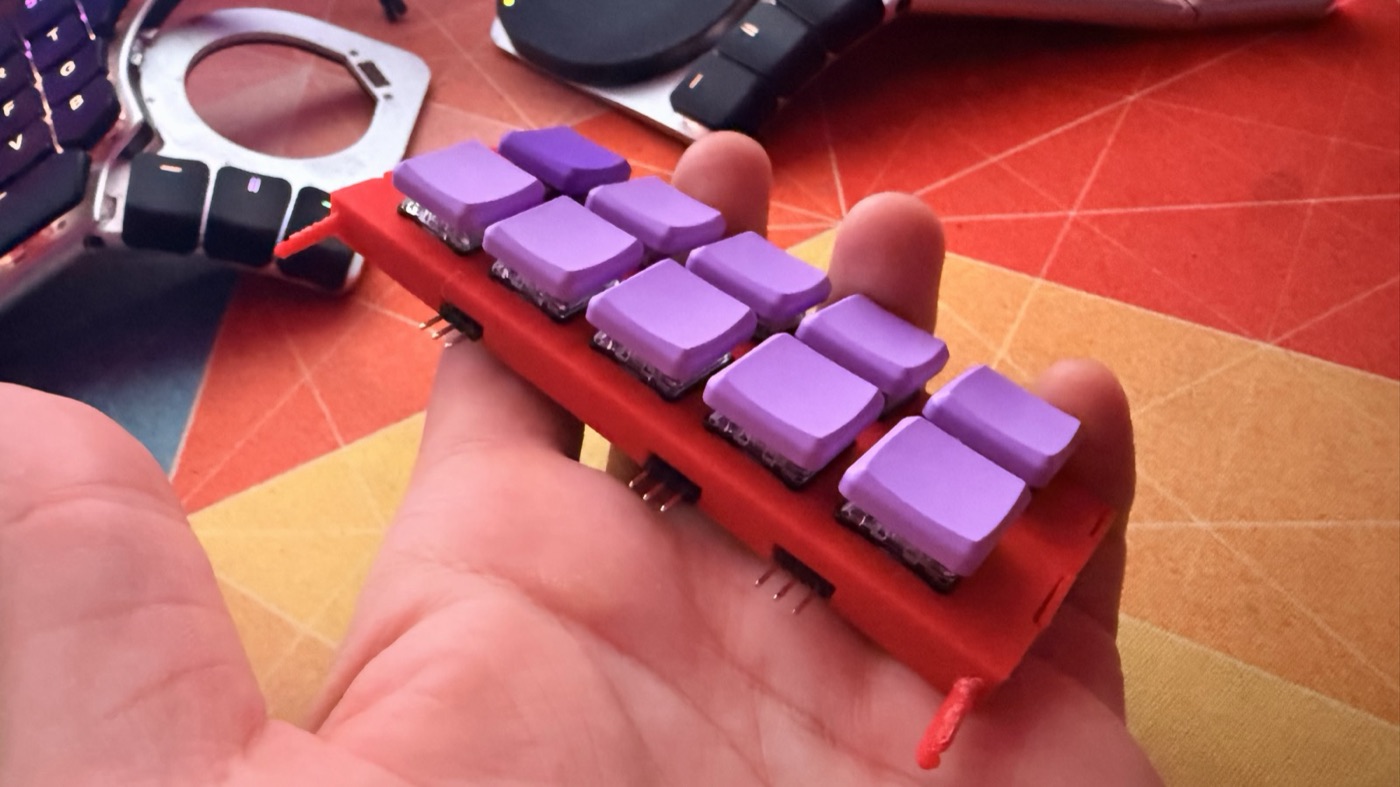
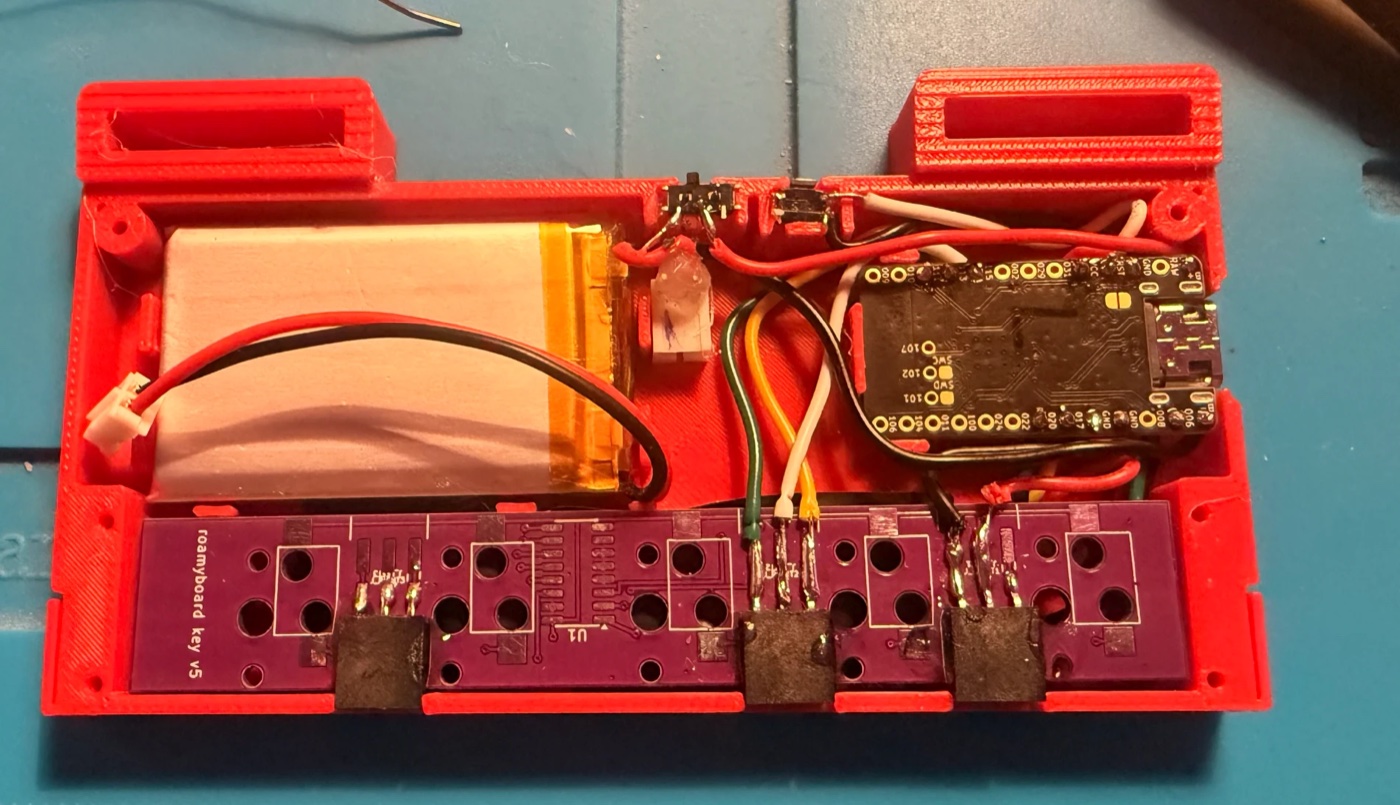
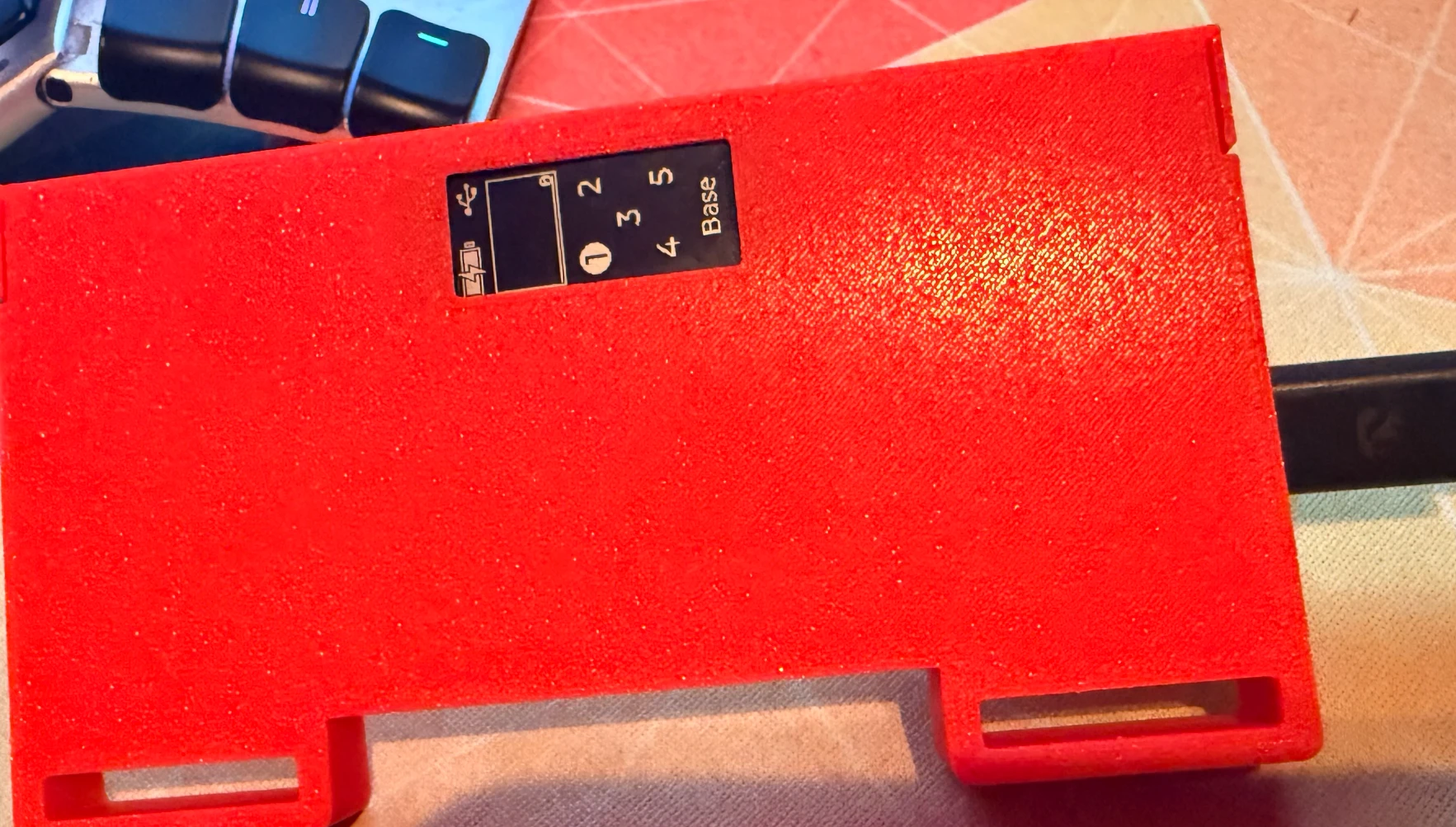
A terminator module at one end, any number of key modules, and the MCU module at the other end with the nice!nano, battery and display. A split keyboard is two halves; a unibody keyboard is one.
Type on the move
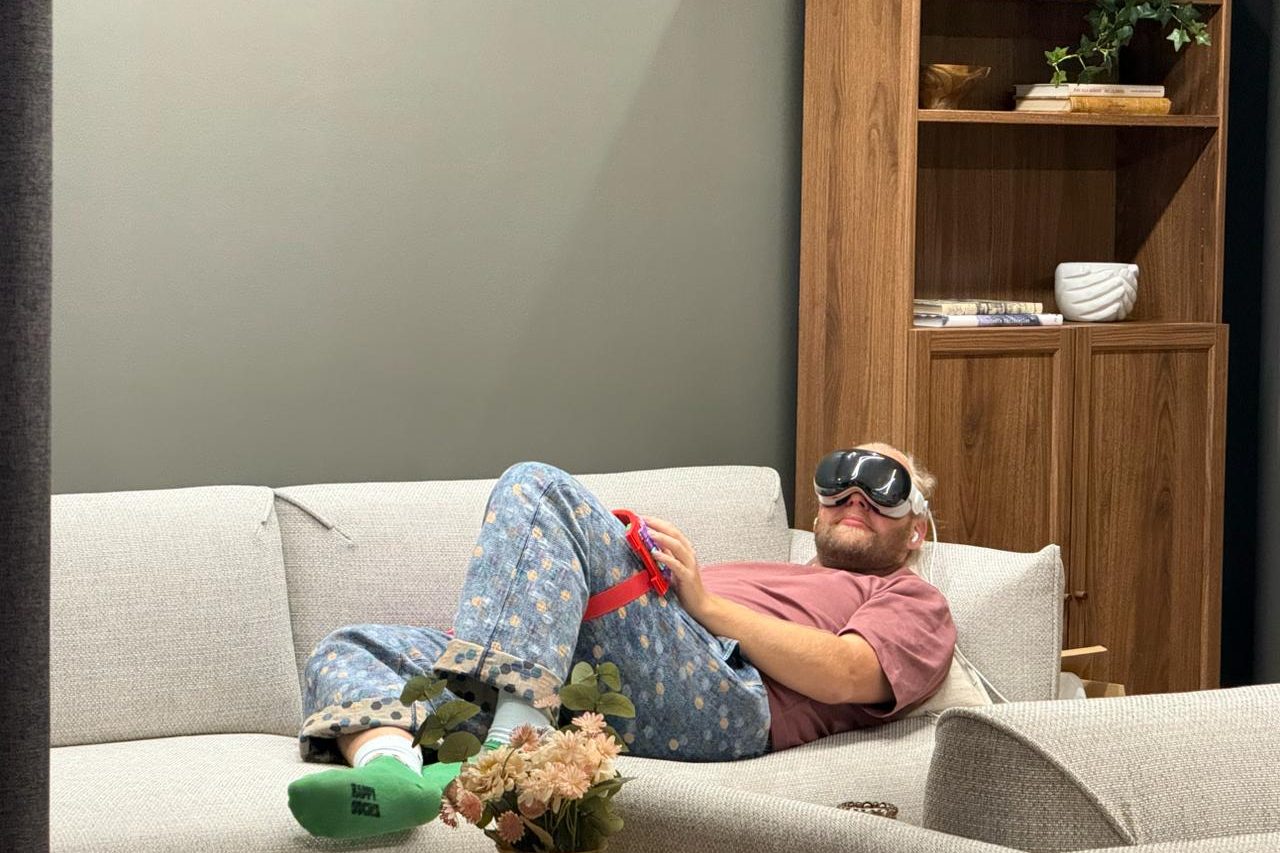
You know how you think better while you're on the move? Then why do we do knowledge work sitting down at a desk? Roamyboard straps to your legs, so you can type while you walk. A keyboard by nevyn.
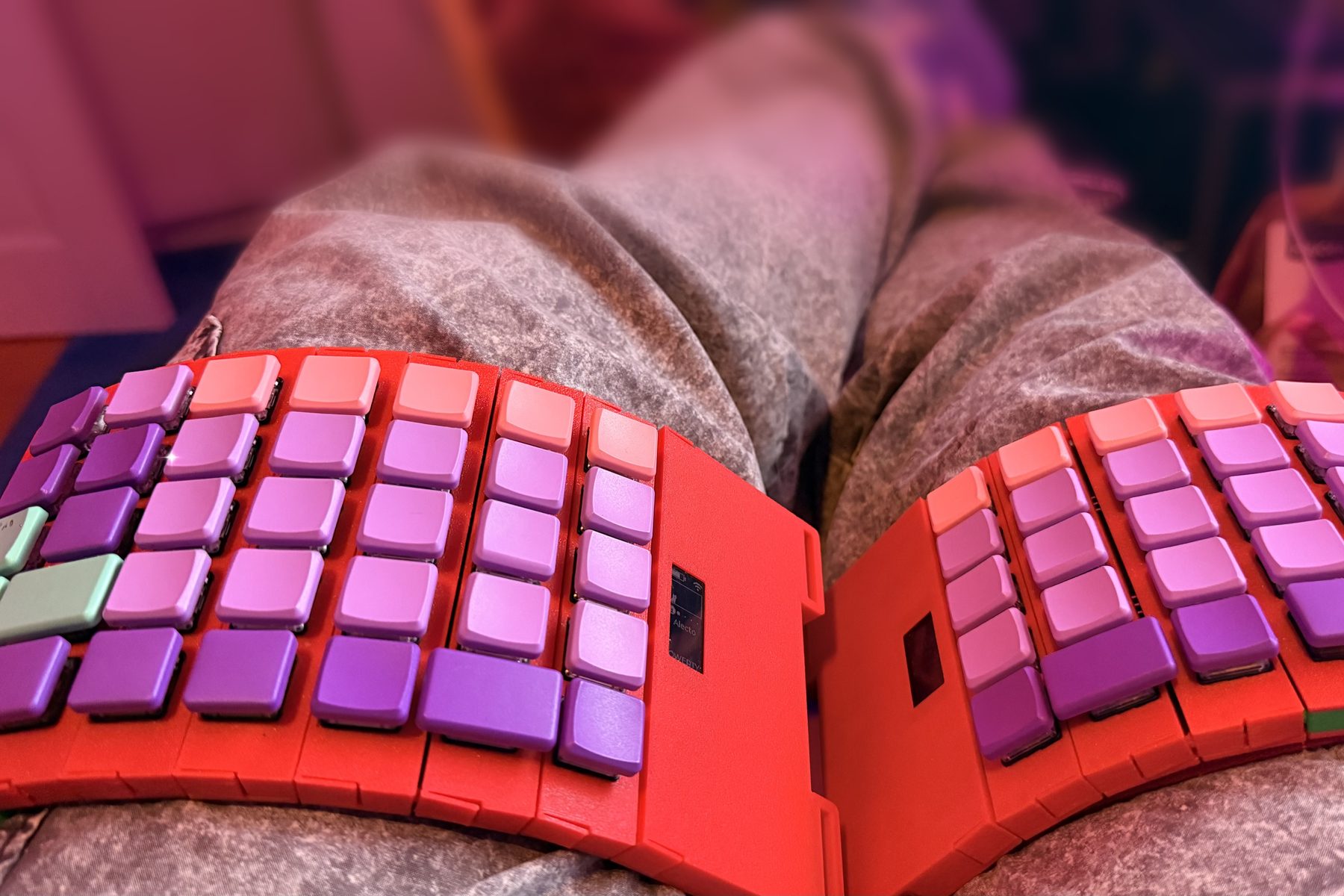
Both halves strapped on: their MCU modules meet in the middle, and each half curves around its leg.
I think so much better when I'm moving, and I want to code while I walk. I've been chasing that since 2012. The first idea was to sew a keyboard straight into a pair of trousers, which turned out to be exactly as impractical as it sounds. Many prototypes later, it has become a row of printed modules on a strap, curved to fit a thigh.
— Nevyn
A terminator module at one end, any number of key modules, and the MCU module at the other end with the nice!nano, battery and display. A split keyboard is two halves; a unibody keyboard is one.
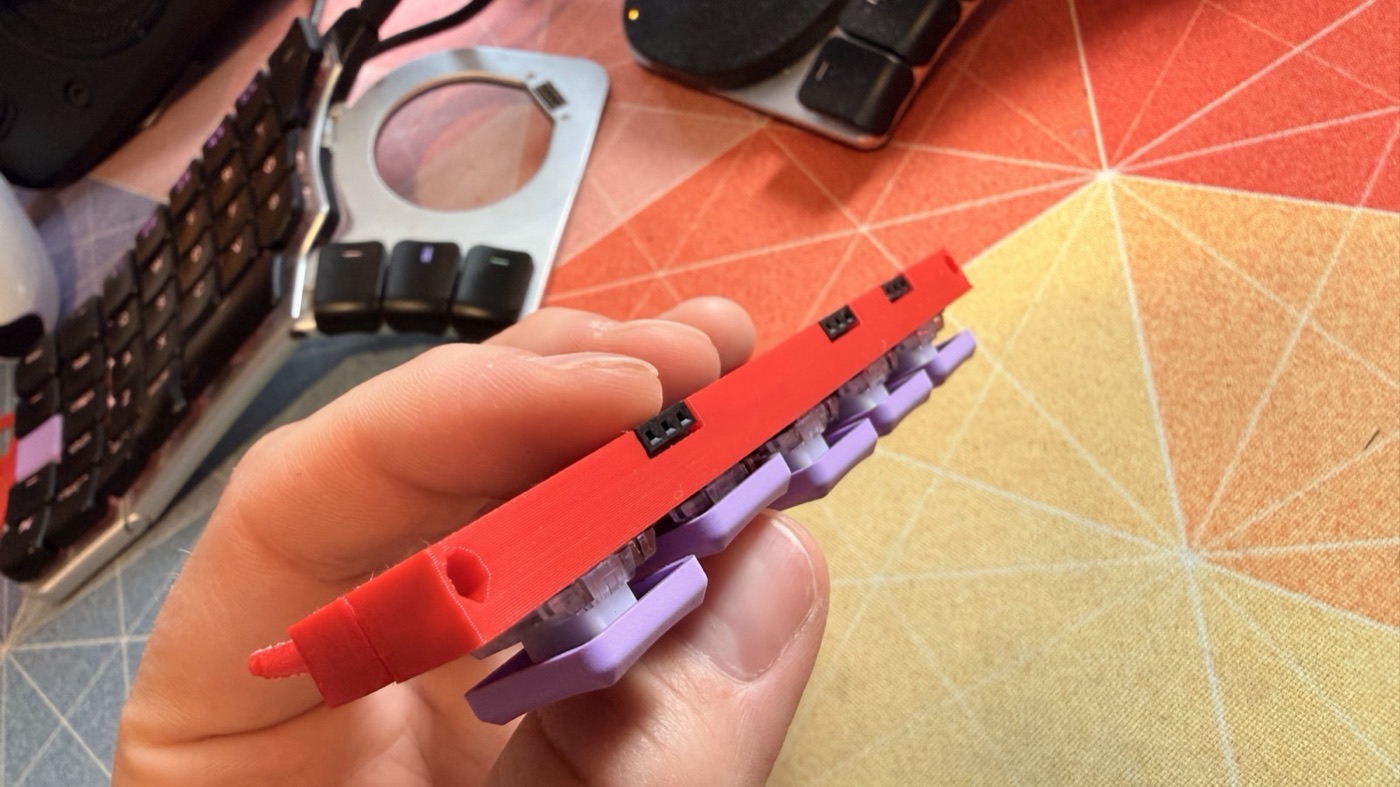
At each joint, a module's header pins slide into its neighbour's sockets and its guide pins into the neighbour's guide holes, and a tooth on each flap clicks into a notch. No tools, no cables between modules.
Every key module adds a shift register to the chain, and the terminator module ends it. The MCU module reads the chain, so ZMK knows how many key modules are attached. Pull one off while it runs and the keys move to their new places.
Pick the halves, key modules, curve, case colour, switches and keycaps, and see what each part costs. The order goes to Nevyn as an email, and he builds it by hand.
Configure yours →The assembly guide covers printing, soldering, assembling, flashing and testing a half, step by step, with a parts list and 3D views of every module.
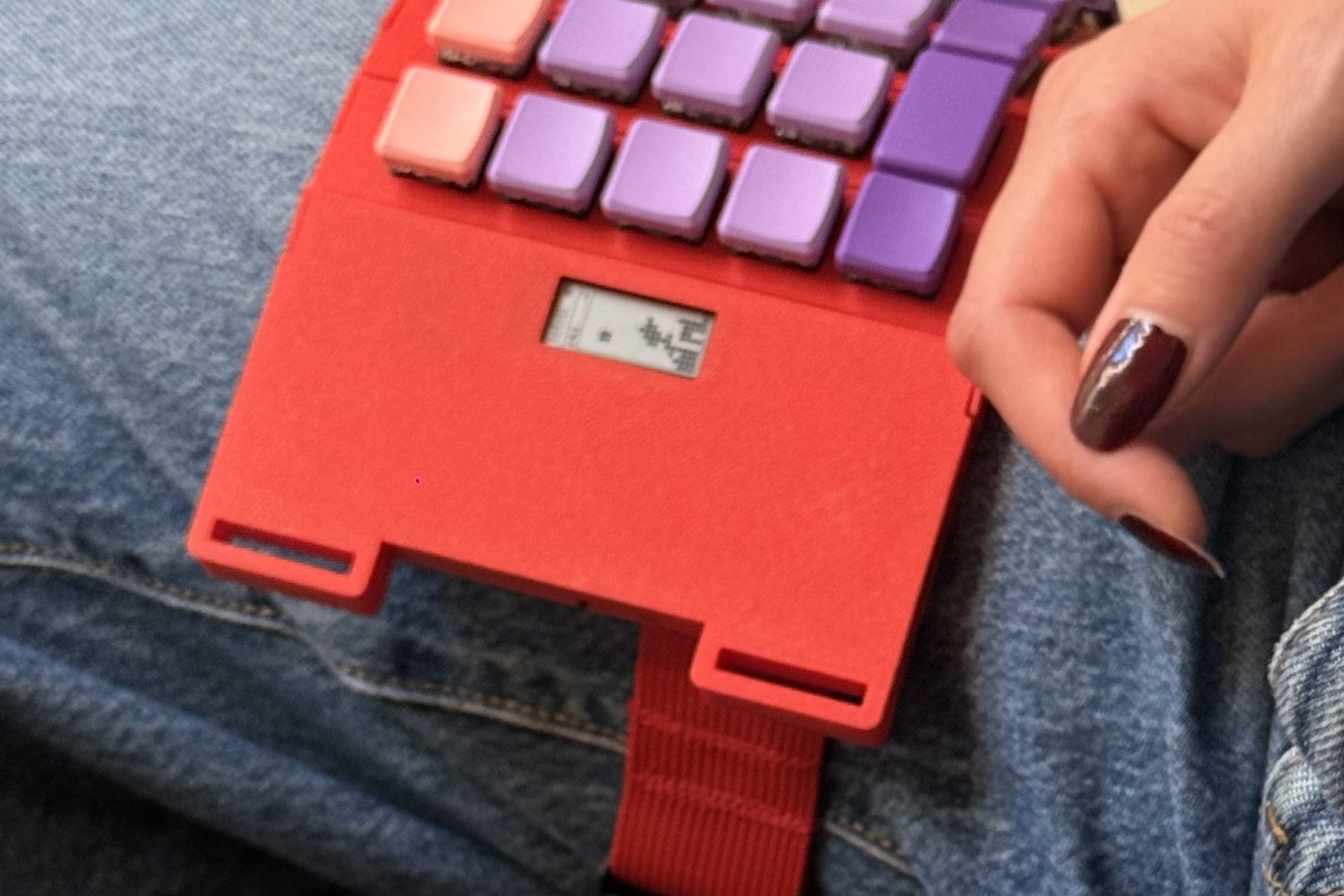
Read the guide →The right half's display is a tiny PDA with notes, a clock, a timer, a calculator, a kana drill and games, played on the keyboard itself.
Read the manual →The default keymap, layer by layer, drawn as the two halves of modules that type it. It changes with the number of key modules per half.
Browse the layers →This is a hobby project, not a shop. Nevyn builds these one at a time, on evenings. Everything is open: the case model, the boards, the firmware and these pages are on GitHub.